Irqah 316-37 / RESIDENTIAL . Riyadh, KSA. 2027
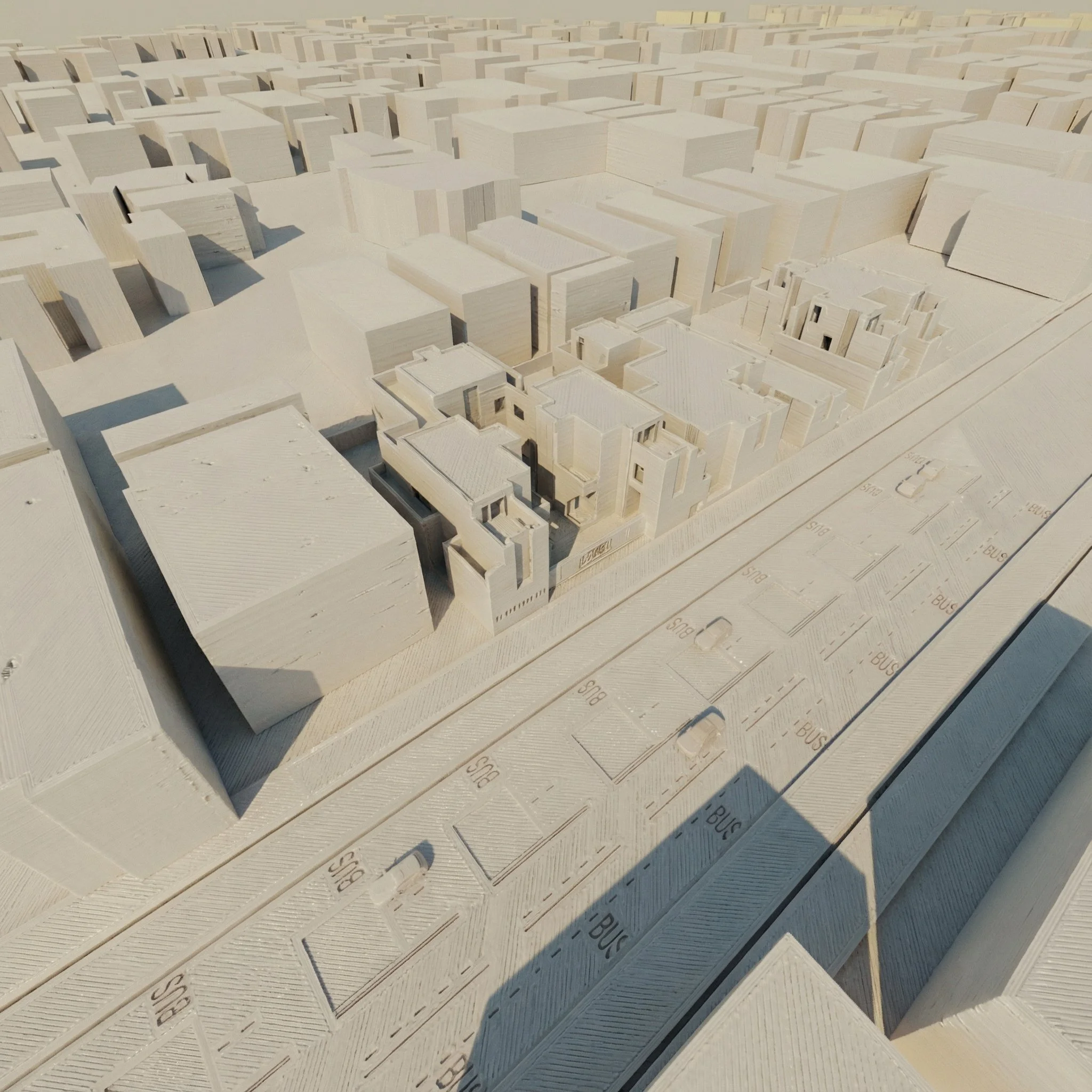
The project presents a contemporary residential ensemble composed of three primary masses arranged linearly along a longitudinal site. The architectural strategy is grounded in an articulation of solid and void, where each built volume is sculpted through a series of recesses, projections, and courtyards that give the masterplan both permeability and strong volumetric character. The plan composition reflects a careful calibration of privacy, openness, and environmental performance, resulting in a cohesive urban frontage that simultaneously reads as a unified development and a sequence of individualized homes.
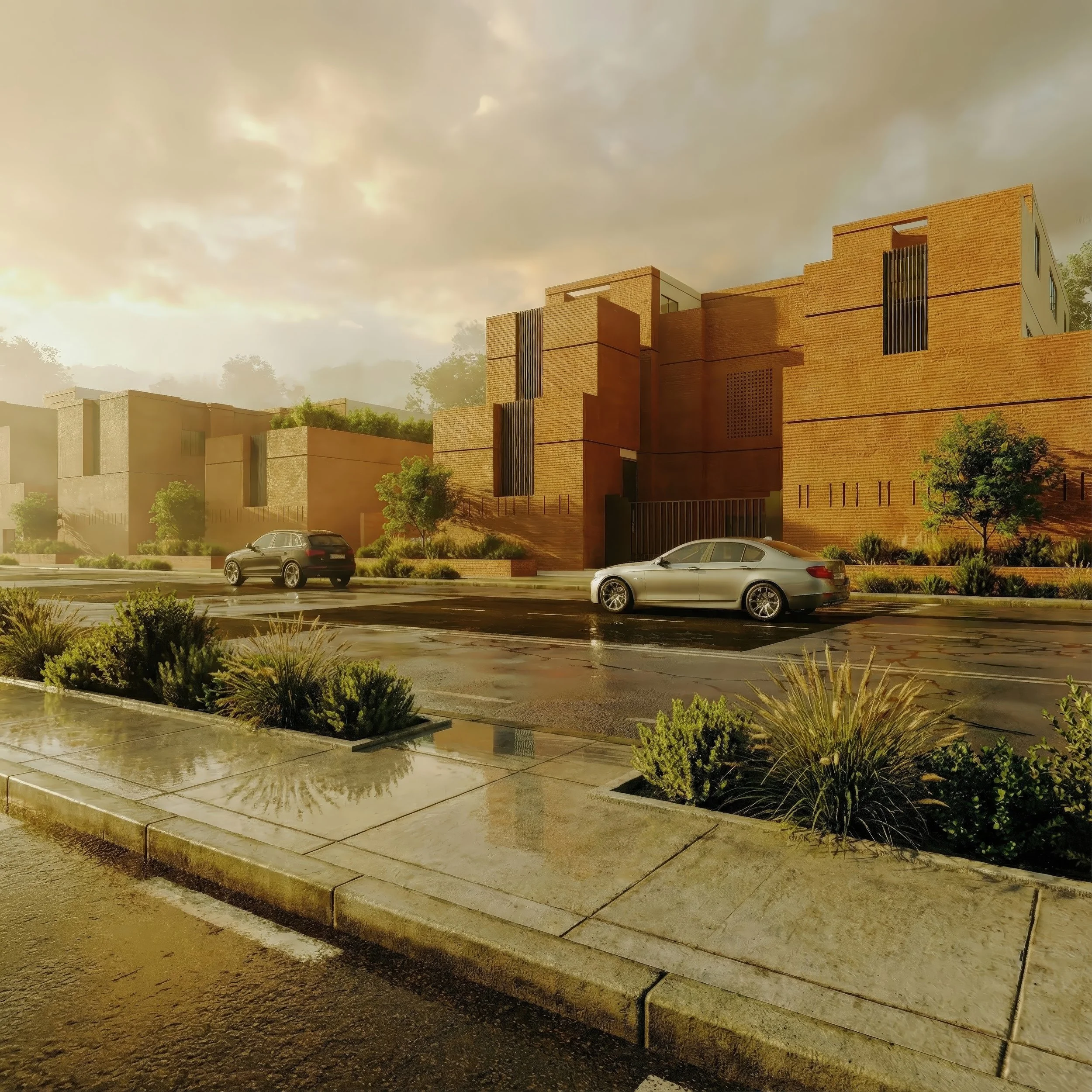
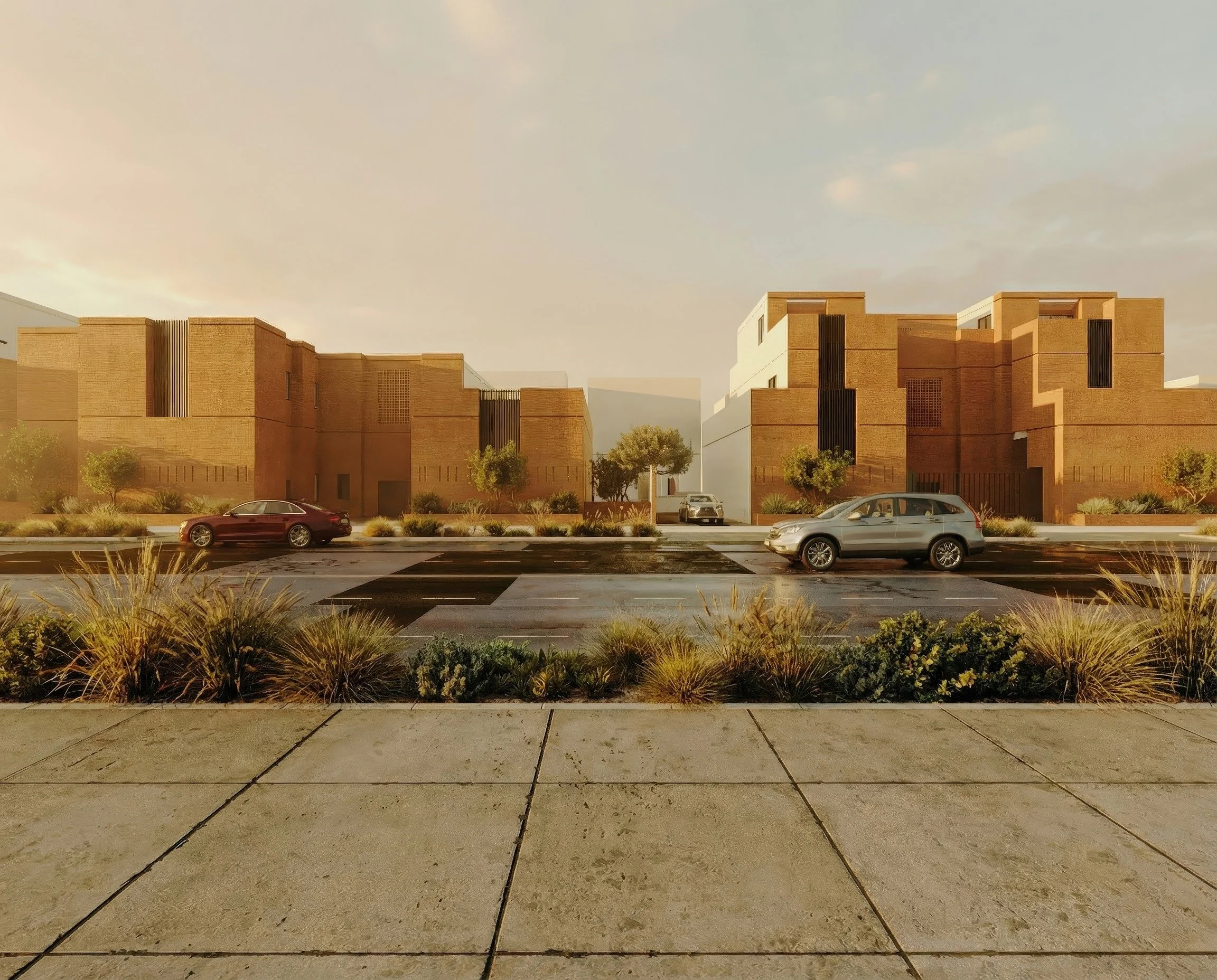
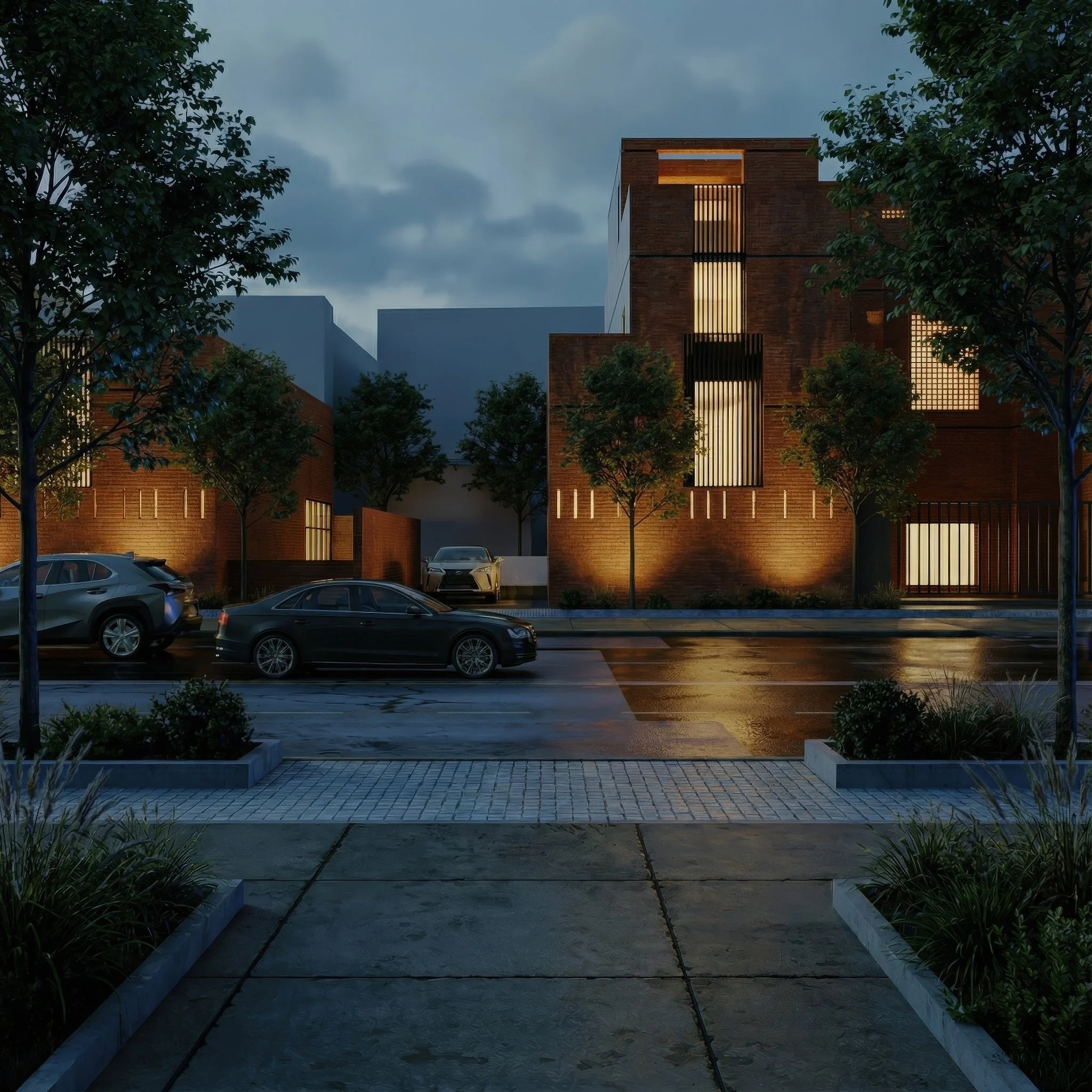
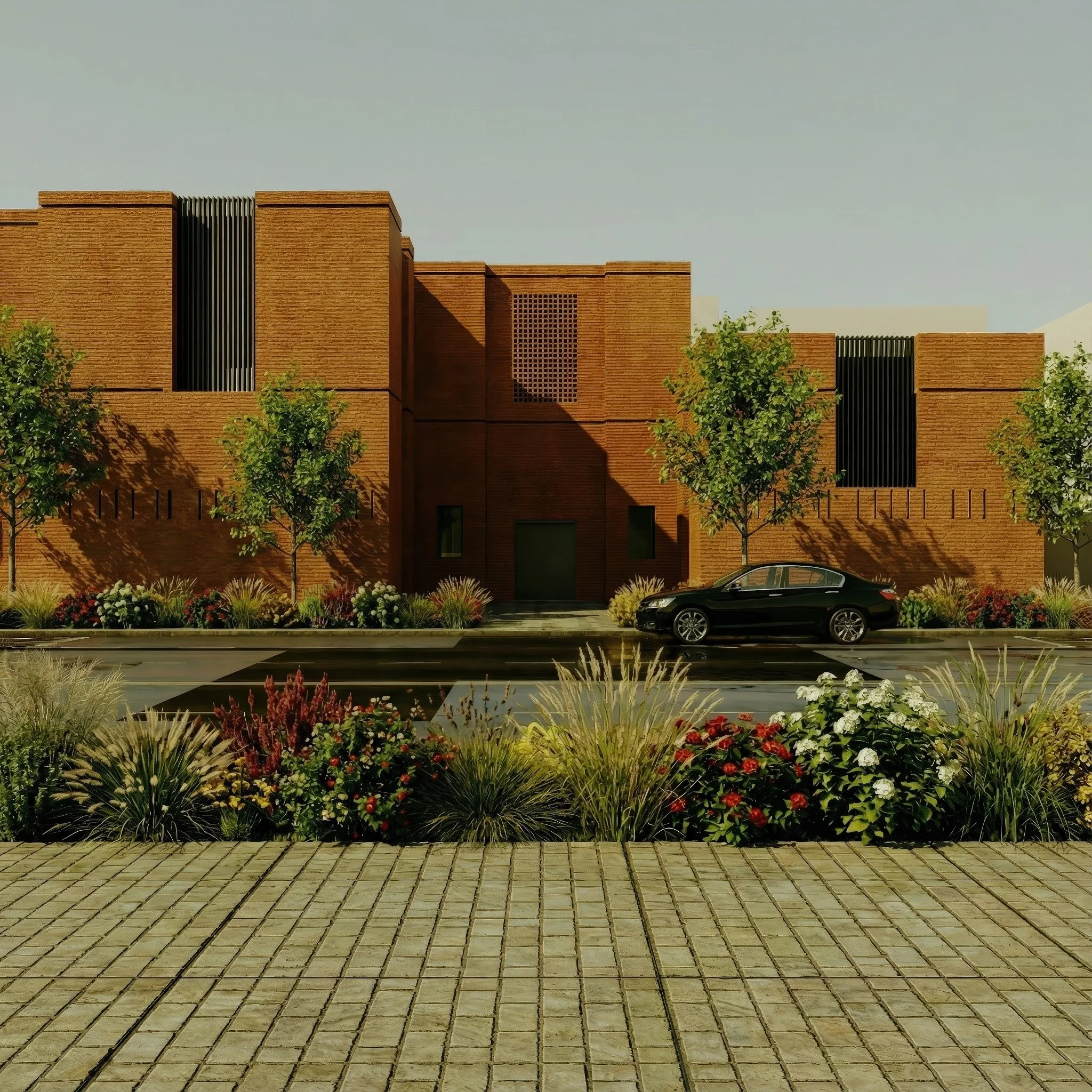
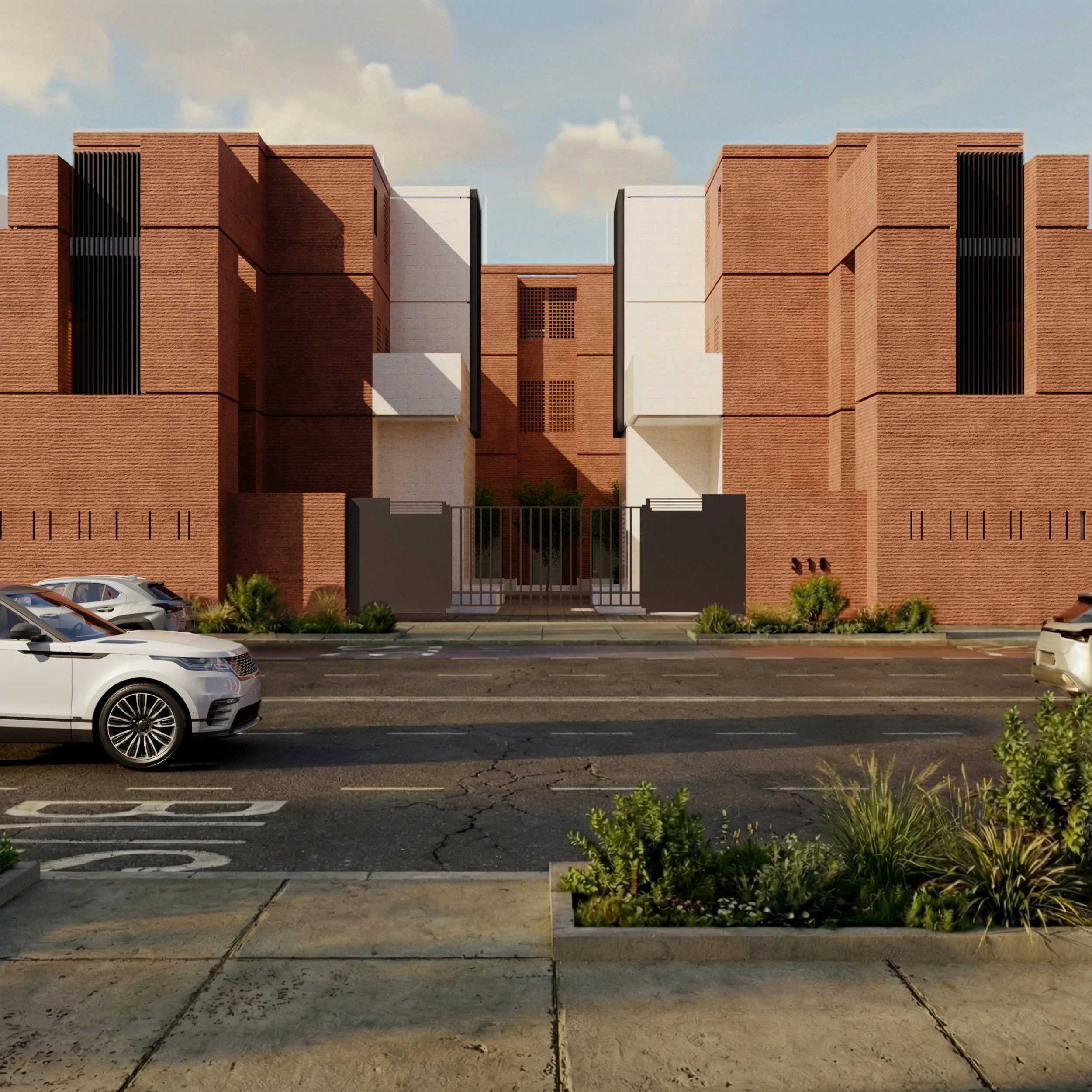
At the urban scale, the project establishes a strong street presence through monolithic, earth-toned facades composed of textured terra cotta cement plaster. These facades are organized into staggered planes that break down the mass and respond to human scale, while vertical slit openings and deep window reveals introduce rhythm and proportion. The interplay between opaque brick surfaces and narrow penetrations emphasizes solidity and permanence, projecting a sense of crafted heaviness that ties the architecture to regional material traditions. The facades are further modulated by screens and shading fins that provide privacy, mitigate solar gain, and create refined daylighting conditions inside.
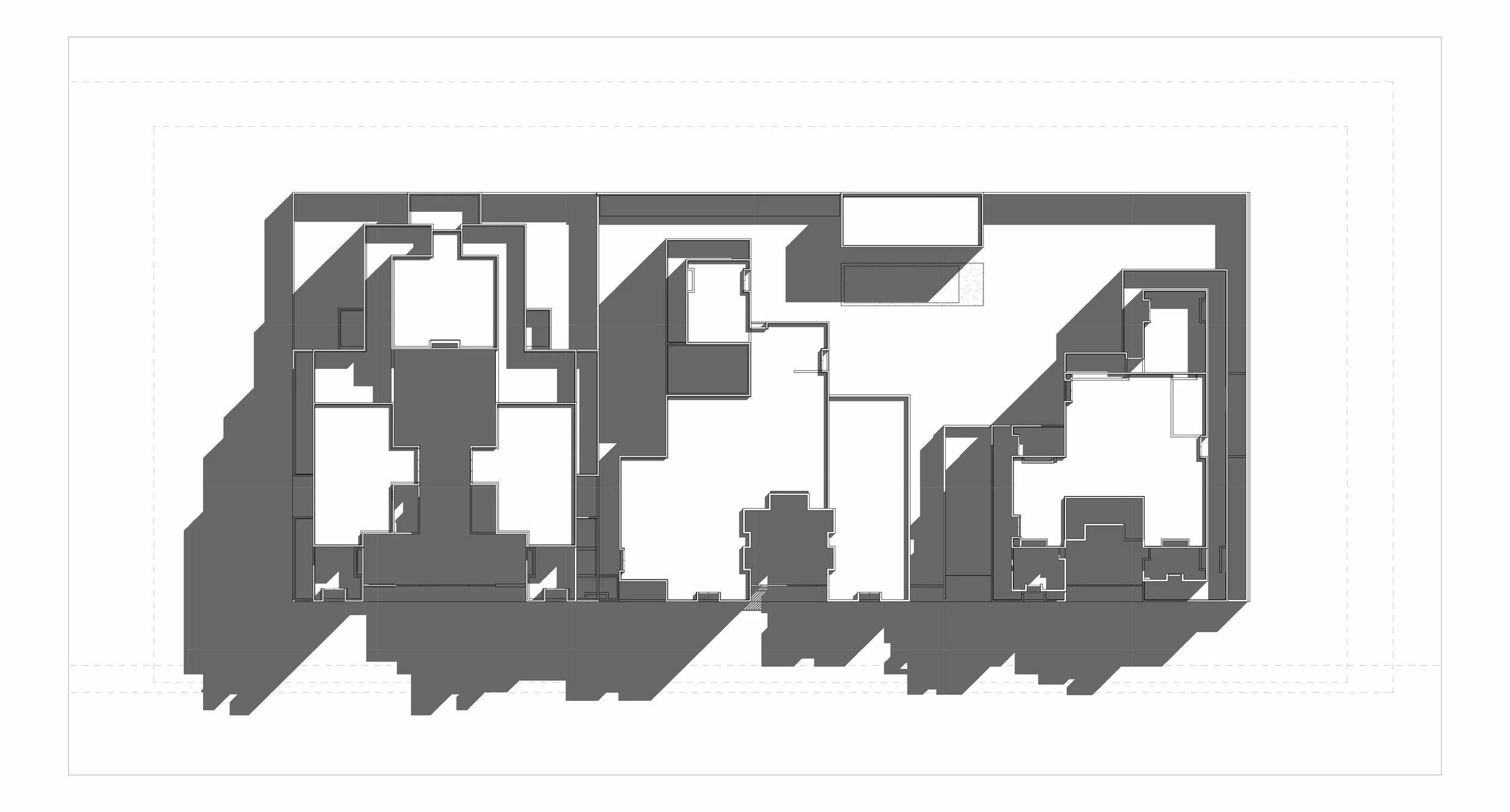
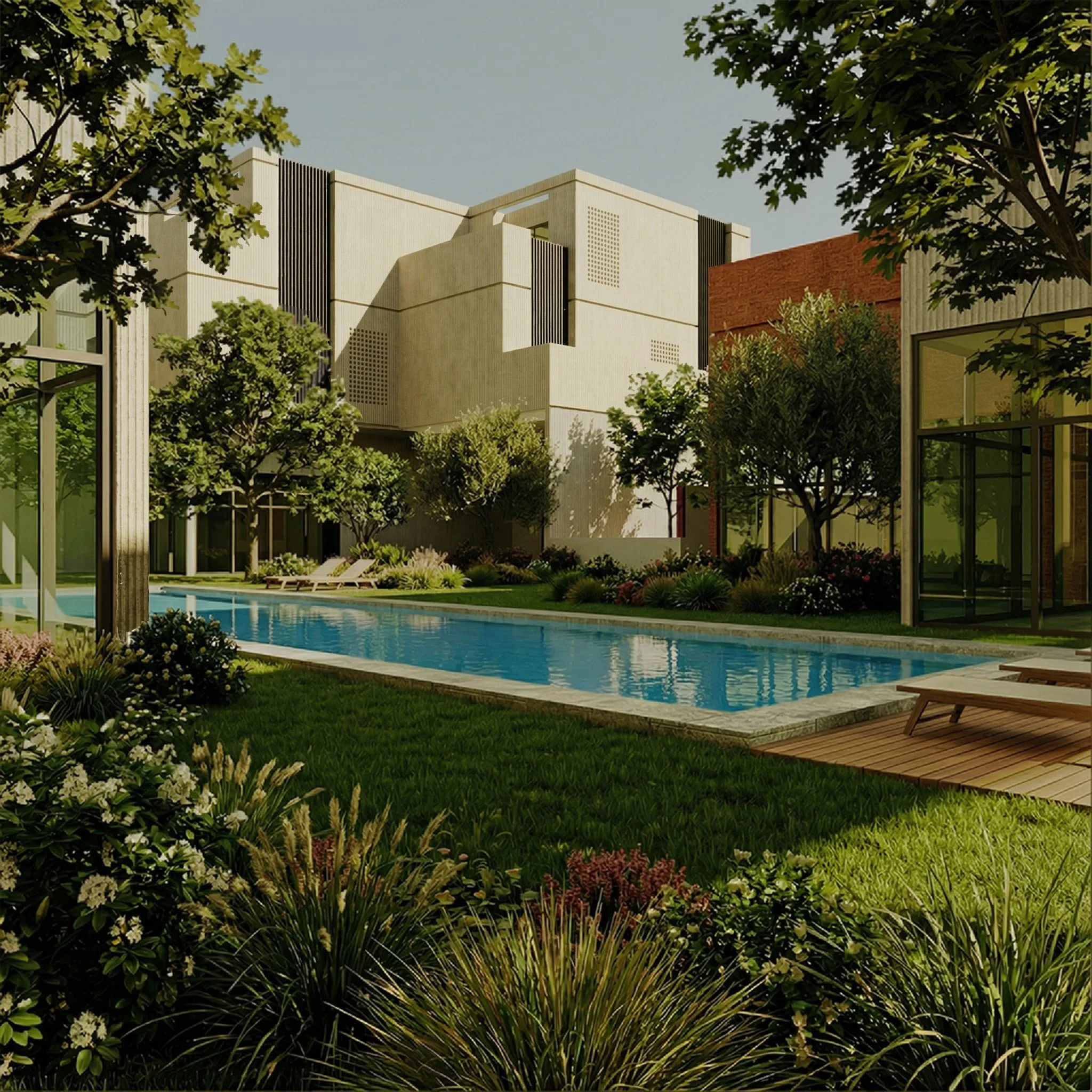
The site plan reveals a perimeter boundary wall that defines a secure and introverted environment, while the interior layout unfolds as a series of interconnected courtyards and open pockets. These voids are not merely residual spaces; they serve as climatic moderators, bringing natural light deep into the built masses and promoting cross-ventilation within the villas. The shadows cast across the plan, a clear indication of a low, warm sun, highlight the stepped rooflines and varying building heights that contribute to a dynamic skyline from the exterior perspective.
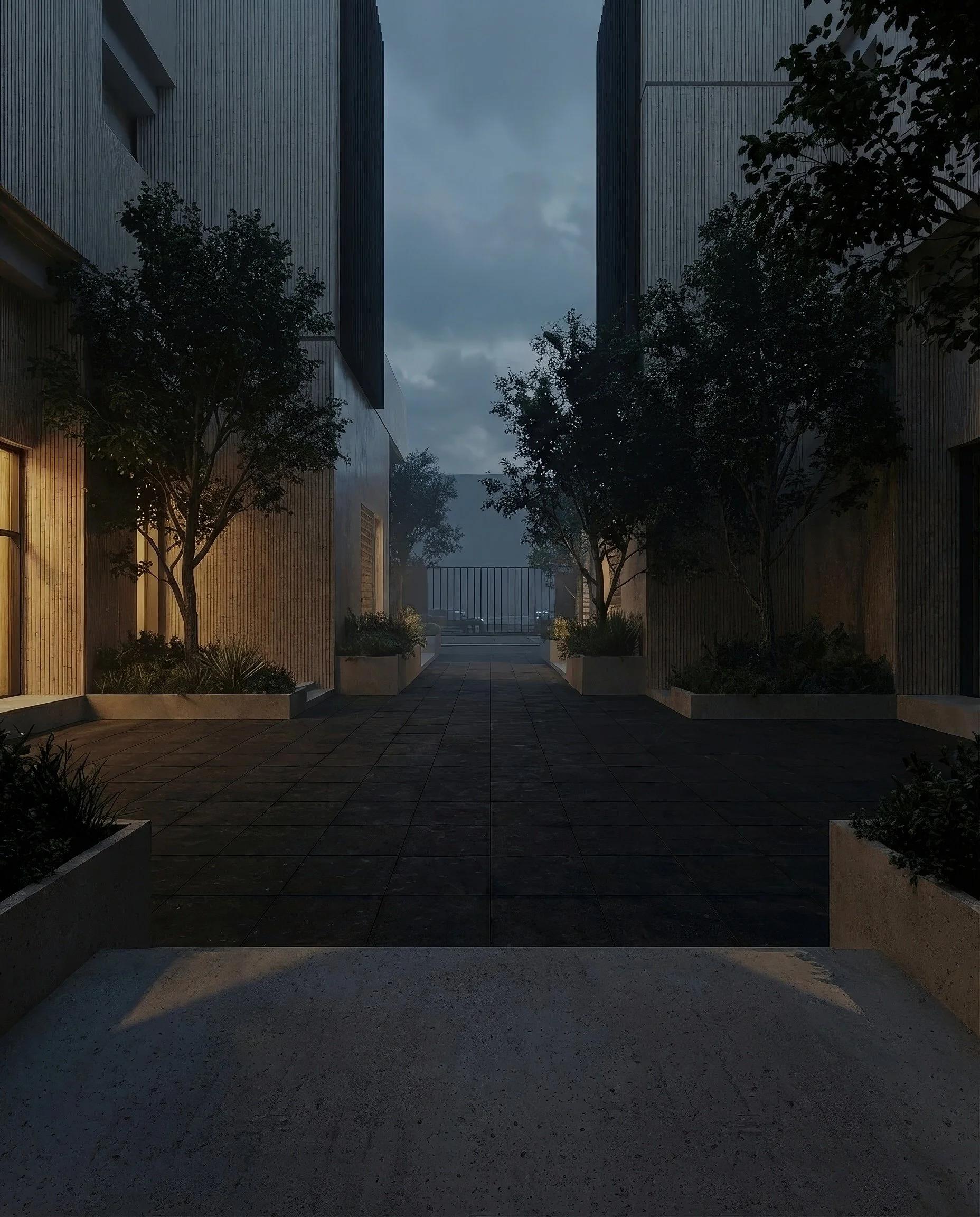
Circulation is resolved through a central spine running along the southern edge of the plot, from which each block derives its primary entry. The placement of entrances, thresholds, and buffer spaces reflects a hierarchical spatial progression that is characteristic of courtyarded Middle Eastern domestic typologies. Public living areas occupy the larger, more open footprints toward garden courtyards, while private sleeping zones retreat into deeper, sheltered wings of the plan. The balance between compact circulation cores and generous spatial expansions reflects an efficient yet luxurious spatial organization.
The project consists of a central istiraha or communal gathering space acting as the heart of the development, flanked by two residential blocks. On one side, a cluster of three villas forms a private residential enclave, while the opposite side hosts a main standalone villa with larger programmatic depth. The composition integrates gardens, outdoor terraces, and an elongated pool that supports leisure and entertainment activities. Across three floors, the program distributes receptions, living areas, private suites, and dedicated entertainment spaces, creating a unified yet hierarchical residential retreat centered on social interaction and outdoor living. The project incorporates an underground parking level with all supporting services, seamlessly integrated beneath the residential and communal spaces.
The horizontal continuity between the masses, punctuated by vertical planes and layered setbacks, creates a calm yet expressive architectural rhythm. This language conveys a disciplined approach to form-making, one that privileges tectonic clarity, environmental responsiveness, and contextual materiality. The project feels simultaneously contemporary and regionally grounded: its formal boldness is softened by craftsmanship, and its privacy-oriented massing is balanced by permeable light wells and intimate outdoor rooms.