
Monitoring Cell for the Reconstruction of the South.
mcrs·
“Reconstruction is not a post-war phase in Lebanon; it is a continuous condition shaped by instability, memory, and fragmented power structures.”— David AouadBrief
The Rebuilding Resilience workshop at the Lebanese American University was conceived as an intensive academic platform addressing the realities of post-conflict reconstruction in Southern Lebanon through the case of Nabatiyeh. Rather than treating rebuilding as a technical or architectural exercise alone, the workshop situates it within a wider framework of political instability, social fragmentation, environmental degradation, and contested heritage. It brings together students, academics, and regional and international experts to examine how cities recover not only physically, but also institutionally, economically, and culturally. At its core, the workshop advances a critical position: that reconstruction in Lebanon is not an aftermath, but an ongoing condition requiring long-term spatial intelligence, ethical responsibility, and political awareness. The initiative rejects static masterplanning in favor of adaptive strategies that operate within uncertainty and fractured governance.
The program opens with an international roundtable that establishes the conceptual foundation of the workshop. Discussions address spatial justice, memory and ruins, design under scarcity, the limits of participation, ecological recovery, and the political agency of architects. Through comparative case studies from global post-conflict contexts, students confront the tension between vision and implementation, aspiration and power. This critical discourse directly informs a structured process of urban research and design development. Students generate layered mappings of governance, morphology, infrastructure, land use, socio-cultural networks, economic systems, and stakeholder relations, supported by mental maps and field interpretation. This multi-scalar diagnosis forms the basis for strategic regeneration proposals focusing on rehabilitation, circulation, public space, housing typologies, and material strategies rooted in local conditions. The workshop culminates in final presentations and an exhibition documenting both process and outcomes. More than a design exercise, it operates as a laboratory for testing how architecture can act responsibly within fragile territories—negotiating memory, navigating power structures, and contributing to more just and resilient urban futures.


Context and Vision
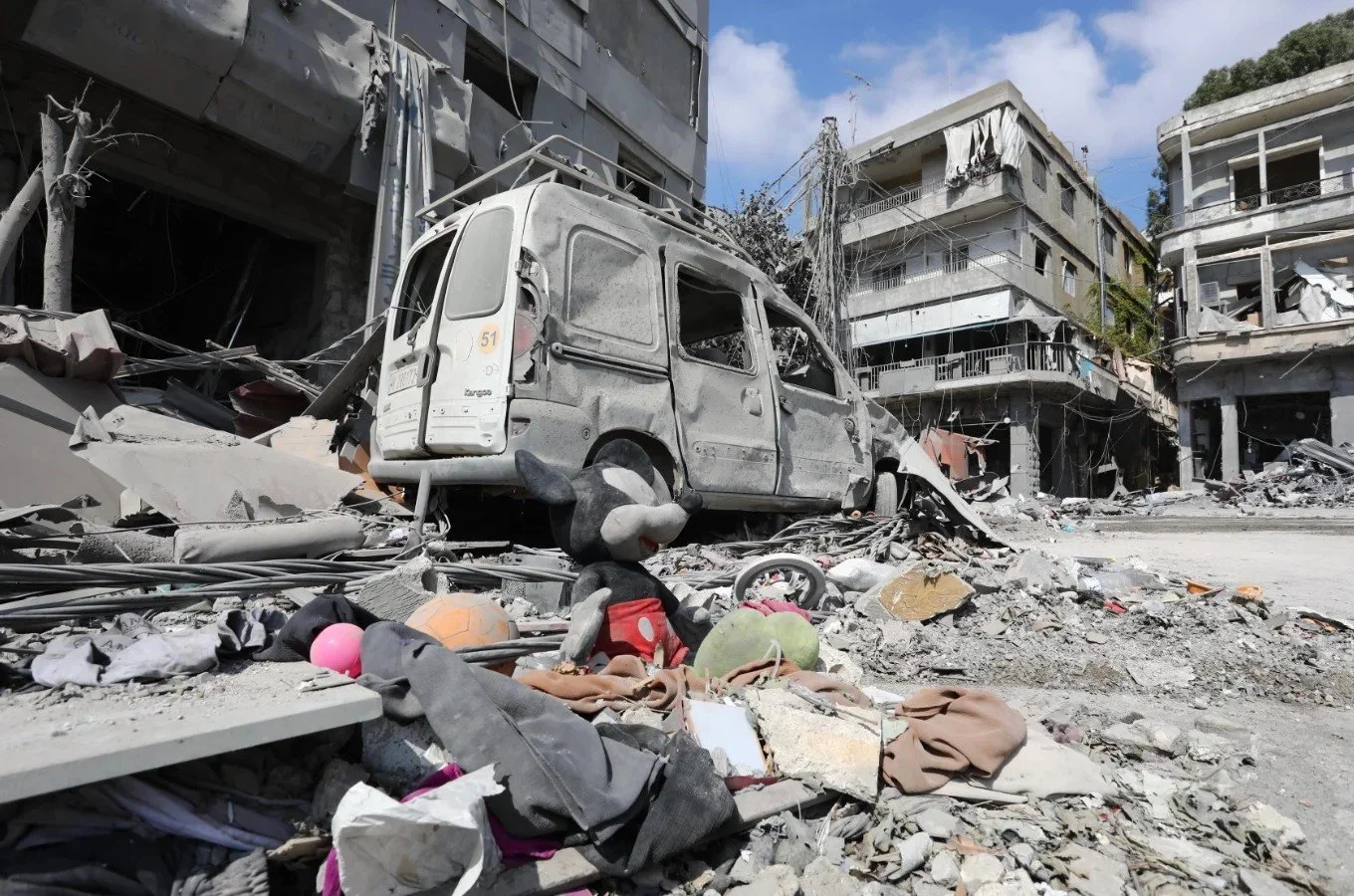
The workshop titled Rebuilding Resilience: Socio-Spatial and Cultural Regeneration in Southern Lebanon was conceived as an academic and civic response to the large-scale destruction caused by the 2023–2024 war. Focused on the city of Nabatiyeh as a live case study, the initiative reframes post-conflict reconstruction as a socio-political, cultural, and spatial process rather than a purely technical or architectural task. Bringing together students, faculty, practitioners, and international experts, the workshop challenges conventional top-down models of rebuilding and promotes context-sensitive, ethically grounded, and community-aware approaches. Participants are encouraged to question who defines reconstruction priorities, how heritage is framed or politicized, and whether architecture can resist dominant power structures rather than merely comply with them. The workshop operates on the premise that in Lebanon, reconstruction is not an exceptional post-war phase but a continuous condition shaped by political instability, institutional fragility, informality, and recurring cycles of destruction. As such, the primary objective is not to generate fixed masterplans, but to train critically engaged designers capable of navigating uncertainty, negotiating memory, and addressing fragmentation through spatial strategies.
Method and Structure
The pedagogical framework is organized around two core active phases following an international roundtable discussion. Phase One: Research and Analysis establishes a comprehensive diagnostic understanding of Nabatiyeh through multi-scalar spatial and socio-political mapping. Students develop layered investigations of administrative boundaries, urban morphology, land use, infrastructure systems, topography, geology, socio-cultural dynamics, economic networks, and stakeholder relations. These technical studies are complemented by mental maps and interviews that capture subjective dimensions of memory, attachment, and fear. This phase provides the empirical and critical foundation for all subsequent proposals. Phase Two: Design Development translates research into strategic urban and architectural responses. Participants formulate regeneration frameworks, rehabilitation strategies for damaged structures, circulation systems, public-space networks, and new typological models rooted in local material conditions and rubble-based construction logics. The emphasis is placed on feasibility, adaptability, and long-term resilience rather than iconic form-making. The process is iterative and collaborative, shaped by continuous critique, expert feedback, and collective refinement across teams.
Debate and Impact
The international roundtable constitutes the intellectual backbone of the workshop, situating student work within a broader critical discourse on post-war reconstruction. Ten major themes structure the debate, including spatial justice, ruins and memory, design under scarcity, the politics of participation, contested heritage, ecological recovery, architects as political agents, post-war site reading, and the translation of vision into implementation within hostile bureaucratic environments. Comparative case studies from Beirut, Sarajevo, Mostar, Gaza, Mali, Medellín, and Burkina Faso expose shared dilemmas across global post-conflict contexts. Panelists strongly challenge the myth of the visionary architect and advocate for incremental, site-specific, and politically aware practices. They warn against superficial heritage preservation, the normalization of temporary architecture as permanence, and the risks of performative participation. The workshop culminates in final presentations and an exhibition documenting analytical findings and strategic proposals. Its broader impact lies in empowering local communities, safeguarding endangered heritage, reinforcing social and economic resilience, and training students to engage architecture as an ethical, political, and spatial instrument for rebuilding fragmented territories.


collaborators
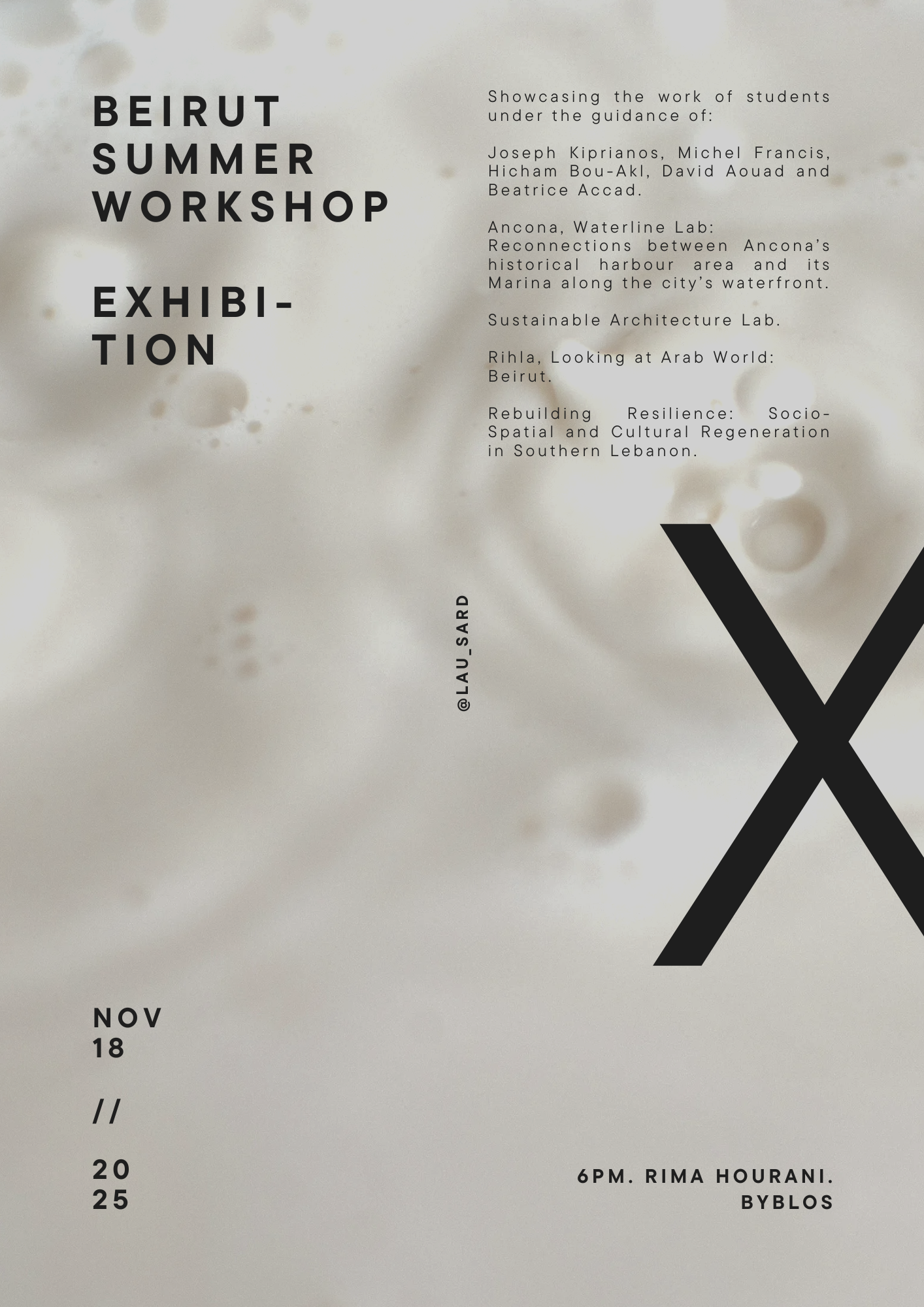
David Aouad, Beatrice Accad
Ibrahim Akkaoui, Lara Rahal, Yasmina Dbouk, Reem Mallak, Samer Lawand, Tatiana Al Banna, Layan Al Chaar, Majd Amer, Lynn Chaaban, Adam Alieh, Lara Damerji, Amina Kamari, Nawal El Makkaoui, Nour Harb, Celine Mansour, Christina Slim, Ali Yassin